Modern healthcare delivery relies on a strong, enduring partnership between medical education and technological innovation. Technology is used to enhance patient outcomes, but it can’t do it by itself. The use of advanced equipment demands experienced, highly trained doctors familiar with the safe use of digital solutions. Structured academic training, mentorship, and cutting-edge medical technology all converge to make surgical care safer, more exact, and personalized, and to push healthcare forward around the world.
Bridging Classroom Learning and Modern Surgical Tools

Understanding the framework of the human body, disease processes, and treatment is the foundation of medical education. But today’s health care demands that trainees learn to use digital tools, including robotic platforms, and theoretical knowledge as well as advanced endoscopic systems. Medical schools should incorporate technology into their curriculum, so they can get their hands dirty early in their medical practice. Educational insights like https://www.brainzmagazine.com/post/dr-omar-marar-mentoring-medicine-and-mastering-surgical-technology emphasize how combining hands-on mentorship with cutting-edge tools prepares the next generation of physicians to deliver exceptional, compassionate care in modern operating rooms.
Enhancing Surgical Precision Through Simulation and Mentorship
The teaching and learning of surgeries have come a long way from the old way of simply observing the procedure. High-fidelity virtual simulators and interactive digital models are used to help teach complex procedural skills to medical students in modern medical education before they enter the working operating room. In modern medical education, advanced virtual simulators and interactive digital models are used in the teaching of complex procedural skills prior to entering active operating rooms. The trainees can repeat these delicate internal structures, robotic arm, and laparoscopic maneuvers in a safe environment. Combining digital simulation with personalized mentorship allows senior surgeons to correct subtle mistakes instantly, refine technical skills, and build procedural confidence. Consequently, young surgical trainees enter live operating theaters fully prepared to execute complex procedures with high precision.
Advanced Data and Diagnostic Training
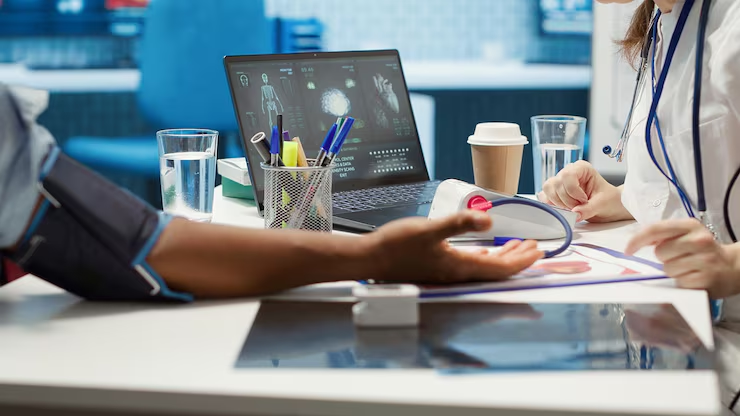
The development of new technology in diagnostic endoscopy and imaging has transformed the way doctors diagnose and assess internal problems in the body. Modern video colonoscopes and digital visualization tools provide detailed images during diagnostic evaluations, allowing medical teams to identify precancerous polyps and tissue abnormalities early. Accurate interpretation of detailed diagnostic information, crucial for effective medical decision-making, is improved by teaching medical students and surgical trainees. Well-trained healthcare professionals can develop individualized treatment plans that address each patient’s specific anatomical requirements, significantly decreasing the risks of the procedure as well as long-term health outcomes.
Fostering Lifelong Learning and Adaptive Healthcare
The healthcare sector is continually changing, with new surgical equipment, treatment directives, and current practices being developed on a regular basis. Medical education should be effective in imparting a lifelong love of learning, and should ensure that doctors remain abreast of technological advances during their careers. When healthcare institutions incorporate continuous clinical learning and cutting-edge technology, it fosters a climate where medical practitioners learn rapidly and efficiently. Continuously updating clinical skills ensures that healthcare providers deliver high-quality, patient-centered care, ensuring that patient safety and overall treatment success remain top priorities as technology continues to advance rapidly.
Conclusion
Medical education and technological advancements are the driving forces behind the advancement of modern healthcare. Advanced surgical systems and comprehensive training and clinical mentorship coordinate to provide medical providers with safer, more effective treatment. With ever-changing technology, the quality of educational structures is important to ensure a physician has technical knowledge and clinical judgment. Prioritizing both medical education and technological innovation creates a safer, more efficient healthcare system that consistently delivers superior health outcomes for every patient everywhere.